

Asking for Forgiveness
Remembering Gershie

Israeli news, especially the last 2 years, has included a lot of funeral footage. For the funeral of a soldier, what we most often saw after the initial post October 7th funerals, it was familiar albeit always painful ritual. First, a sound bite of the funeral and memorial prayers, sung by one of the the IDF ritual team (my sister Sarah, z”l, loved Shai Abramson, the chief IDF cantor, for his gorgeous tenor), and then family members speaking, often through their tears as they describe their wonderful loved one. We hear just enough on the news to feel, as always, that each of these young guys (especially when it’s soldiers) was someone who would have changed the world, had he lived.
The joyous return of the hostages was followed by those hostages who came home in a coffin for burial in Israel. Those funerals were marked by the family’s deep sadness and fatigue for the last 2 years alongside a feeling of this-is-the-right-thing-to-do, that is, to have a loved one to bury and to visit in the cemetery. I have friends who’s son-in-law and family are still waiting for a body to bury.
What does almost everyone implore from their loved one? Forgiveness.
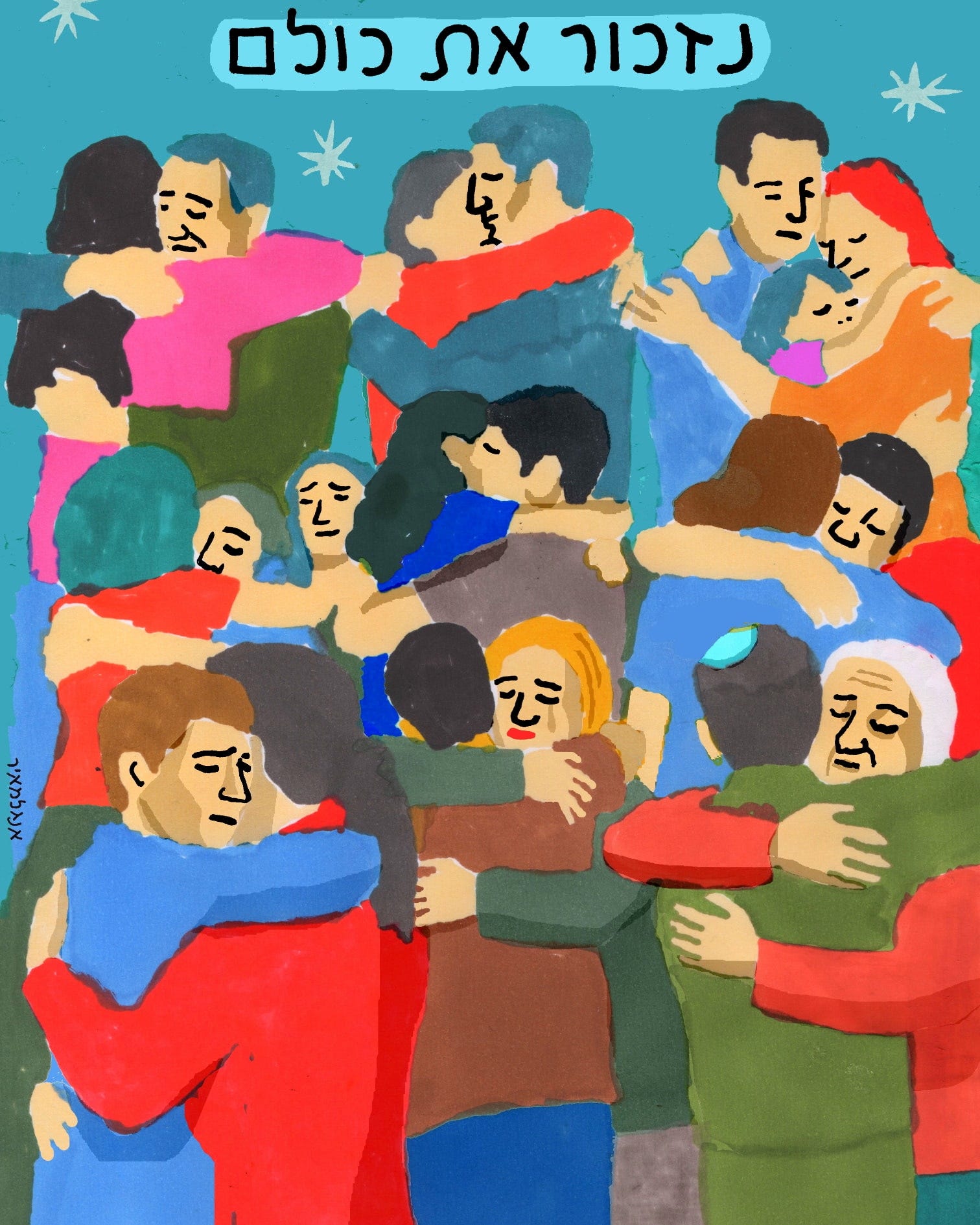
Interestingly enough, it is traditional to ask for forgiveness at the end of a funeral service. The loved one’s body has been put into the ground, and usually it’s the Hevra Kadisha or the burial society, who prepared the body for burial, who officially asks for forgiveness for any unintentional lack of honor shown to the deceased during the preparation of the body.
But I’m talking about something else. The need to ask for forgiveness for more than the usual. Forgiveness for not saving a loved one on October 7th. Forgiveness for their pain and suffering. Forgiveness for not finding a way to bring them home sooner. Forgiveness not knowing they wouldn’t ever see them again (often parents of soldiers share their last SMS or phone conversation with their child, or in the case of bodies returning to the kibbutzim, those last terrifying messages “they’ve broken into our house,” or “our house is on fire, we can’t breathe,” or “we never thought we would die this way,” that line was from the painful story of Mati and Amir Weiss z”l of Kibbutz Be’eri, which I wrote about December, 2023).
Forgiveness for being alive when so many have died.
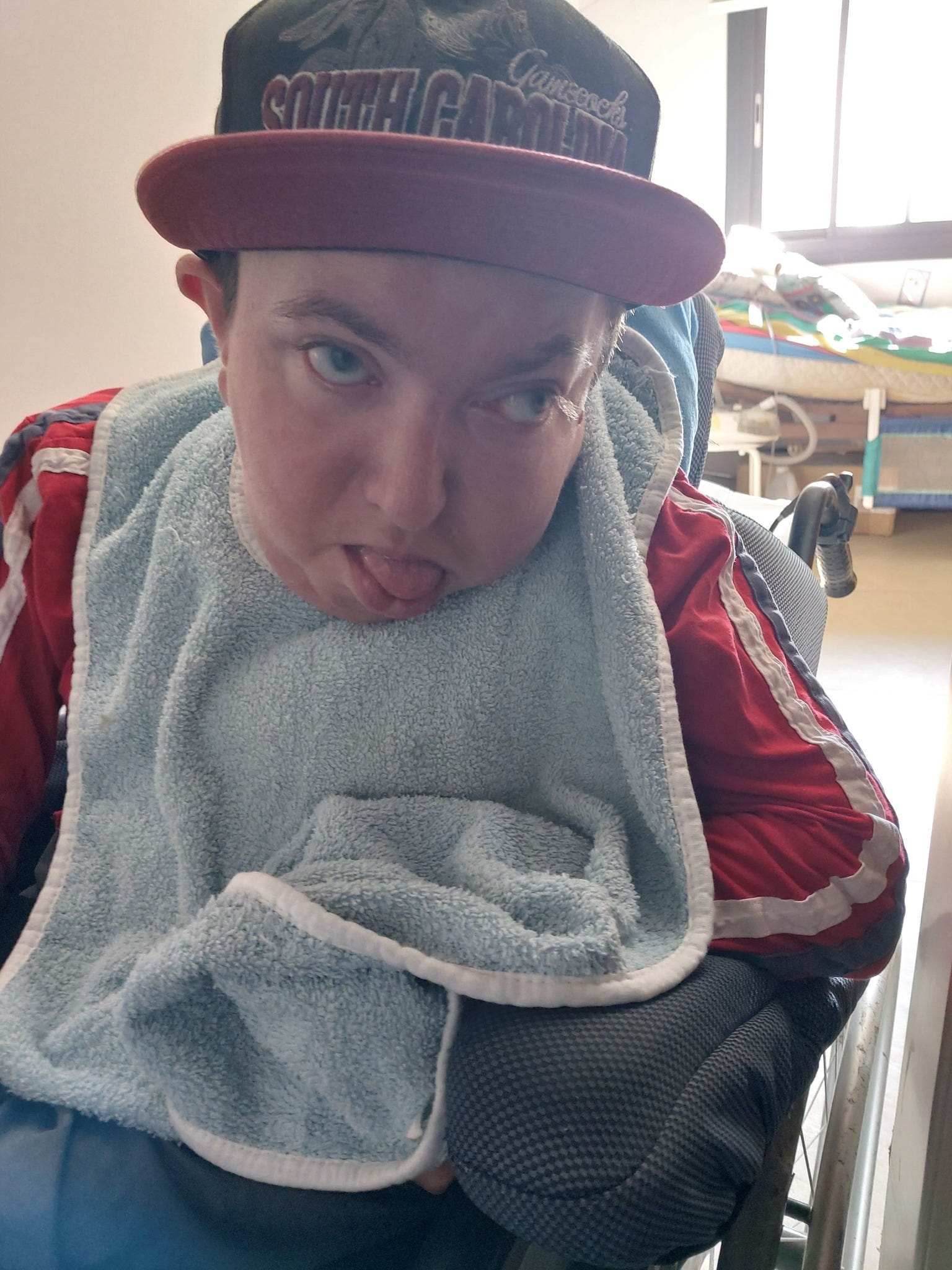
Today, Ira and I went to a funeral marking the life of Gershie Brickner. Gershie, the son of friend’s Debby and Avi, died on his 31st birthday as his parents washed and made motzi, the blessing over the Shabbat challah. Checking in on him a few minutes later (they’d checked on him a few minutes earlier as well), they realized he wasn’t breathing. Gershie had Canavan disease, a rare, recessive genetic disorder. It’s a degenerative disease that causes progressive damage to nerve cells and loss of white matter in the brain. That he lived until his 31st birthday had a lot to do with the sophisticated and thoughtful care that his parents gave him - and in the last decade, with the help of Denver, an in-home caregiver - birth to death. Gershie wasn’t so strong these last couple of years, and his parents knew that the day would come when his body would be ready for those final breaths that he took on Saturday. Debby and Avi stood next to Gershie’s younger twin sister’s, Nechama and Yehudit, facing Gershie’s small tallit-prayer shawl wrapped body.
Debby spoke for the family, sharing Gershie’s early years when he was more physically able, remembering his big smile (I also remember that smile from a few years ago) and his warm and thoughtful eyes that said so much - without speech.
She then asked his forgiveness. Forgiveness for whatever they hadn’t done to help him be comfortable. Forgiveness for whatever they hadn’t done to help him in whatever way they could have done during his life.
I wondered at her words, and how the people standing there understood them. Meaning, most people, as they initially commented online to Gershie’s death announcement commented that Gershie couldn’t have had more dedicated and loving parents, that their dedication was nothing short of amazing. That Gershie couldn’t have been born into a better family. It was said and written with love but for me, as a fellow traveler in the world of raising a child with different needs, it’s that stuff that people often say to parents who have children with disabilities. Their fear and their discomfort (I’m not judging, I’m just noting) makes it hard for them (the parent who doesn’t have a child with a significant challenge) to grapple with the care, the work, and the love which they give, endlessly, to their “special child.” Yes, because they should do it, and yes, because they want to do it, and yes, because it’s what we do for our children. It’s hard to get it unless you’ve known it, and experienced it yourself.
And yet, she asked forgiveness.
Caring for someone whom you know may not make it out of childhood, or their teen years, or their young adulthood - this as Gershie surprised everyone, aging into his 20’s, then turning 30 - is all encompassing, requiring team work and constant dedication. Of course, Gershie was their son, their beloved oldest child. They cared for him, as well as loved and enjoyed him, because that’s what you do for your beloved family member. Easy? Of course not, and they didn’t do it for the accolades. They did it for him, for themselves, and for his sister’s. For their family.
And yet, she asked forgiveness.
Someone spoke, giving some words of Torah, drawing from this past week’s section, Noah. He cited this line and Rashi’s interpretation of Noah’s entry into the ark, and spoke about belief.
וַיָּ֣בֹא נֹ֗חַ וּ֠בָנָ֠יו וְאִשְׁתּ֧וֹ וּנְשֵֽׁי־בָנָ֛יו אִתּ֖וֹ אֶל־הַתֵּבָ֑ה מִפְּנֵ֖י מֵ֥י הַמַּבּֽוּל
Noah, with his sons, his wife, and his sons’ wives, went into the ark because of the waters of the Flood.
Rashi notes that Noah doesn’t enter the ark until the flood waters come onto the earth. That Noah wasn’t such a “believer” in G-d’s power and as such, he needed to see evidence that he had to enter the ark and find safety. “Noah, also, was of those people who are wanting in faith: he believed and he did not believe - מאמין ולא מאמין - that the Flood would come, and he would not enter the Ark until the waters forced him to do so (Genesis Rabbah 32:6).
It occurred to me that Debbie and Avi were like Noah. They believed in Gershie’s life and chose not to believe in his death. They believed in his life force until they were forced to accept when his body was flooded and breathing was no longer possible. They believed in him.
Now I must ask forgiveness. Debby told me a few months ago that when I asked after Gershie (I often saw her in the pool), I too often tried to problem solve. I am a problem solver and while I for sure didn’t have big ideas for Gershie’s care - they were the experts - I clearly made a suggestion that they just didn’t need to hear. From anyone. When Debby told me this, I went home and had a think and made sure to apologize when I next saw her, but it niggled at me. This idea that I had caused my friend any hurt, when she was doing her best to love and care for her boy until the end. I was a bit like Noah, albeit in my own way, “I believed and I didn’t believe,” hoping I could make a helpful suggestion as opposed to just listening, supporting, and believing.
We walked to the car after the burial, stopping to visit Hersh Goldberg-Polin’s grave. It rests in a new section, only a few graves nearby, one of them Uriel Baruch, who’s body was returned and buried only last week. Hersh’s grave is covered with notes, gifts, and soccer memorabilia. It’s heartwarming and depressing. Why didn’t he make it home along with the other five murdered that day in August 2024? I asked his forgiveness for all of us - from all of עם ישראל now waiting for the last hostages to come home.
Gershie. Rest in real peace. May your memory and your smile bring us all some much needed blessing.
#BringThemAllHomeNow