

A Tempest in Jerusalem
"...The solemn temples, the great globe itself, Yea, all which it inherit, shall dissolve, And, like this insubstantial pageant faded, Leave not a rack behind."

The Tempest. That’s this year’s play for Theater in the Rough’s 15th summer season. It wasn’t my first choice, and yet, I’m so happy it’s what we’re doing, even though it’s a comedy. What’s wrong with a comedy you might ask, let alone The Tempest? Aren’t comedies funny, and filled with favorite audience moments, slapstick silliness, mistaken identities, storyline mayhem and of course, young love. Shakespeare rarely gives us any other kind of couple-hood, other than the falling-instantly-in-love kind, making one wonder about his own relationship with Anne Hathaway, the movie Hamnet and Maggie Farrell’s imaginative portrayal aside. And, if the show ends with everyone coupled up, generally there’s more than a few couples that will not make it to the 1st anniversary, at least when seen through modern eyes. (Think Maria and Sir Toby in Twelfth Night, or Angelo and Mariana in Measure for Measure, and everyone’s favorite, Petruchio and Kate in Taming of the Shrew.)
Ask me the storyline of a Shakespearean comedy, and you’ll most likely walk away confused. The comedies are designed to mix-stuff-up for the audience, while the tragedies are simpler to follow, and not just because the trail of bodies at the end of the play leaves you with a clear idea of who won and who lost. Histories are often easier in terms of following the story, based as they are on real people, and actual historic events (with some creative license taken) that every self-respecting English person knows. At least they know the names of these historic figures and their reputed greatness or ‘badness,’ while we Americans have to work to follow the historic lines of the British kings, from the many Henrys to the multiple Richards with an occasional John thrown in for interest.
By comparison, the comedies often feel sort of revisionist, given that the playwrights of the time, Shakespeare included, repurposed familiar stories known to many and used well-known storytelling tropes of the time. They played to their audiences, what they liked and what they knew, which in Elizabethan times included the New and Old Testaments, Roman and Greek mythology, astrology and oral histories. People weren’t necessarily readers - it’s estimated that during Shakespeare’s time, only 30% of men, and 10% of woman could read - but they listened to stories and songs from a young age, and even in rural settings there were visiting theatrical troupes and performances during holidays and harvest times, allowing people a way to develop a taste for performance and the performative.
The Tempest has specific groupings of people - nobles, the ship’s captain and crew, drunks (mechanicals as they’re called in Midsummer, meaning, working dudes who are meant to delight the audience with their slapstick action), and the island dwellers (Prospero, his daughter, Miranda, the monster, Caliban, and sprite, Ariel) - most of whom don’t meet up with each other until the final dénouement and story resolution in Act V. (It’s not unusual for different groupings of characters not to meet up during the course of the play, as each group navigates their story’s arc within the play’s intentions.)
Btw, it’s thought, regarding The Tempest, that it’s Shakespeare’s last play, given Prospero’s ‘end of life references,’ like this one at the end of the play.
“Now my charms are all o’erthrown,
And what strength I have’s mine own,
Which is most faint.” Prospero, Epilogue, Act V
Shakespearean scholar, Emma Smith writes (listen to her “Approaching Shakespeare” podcast - great stuff),
“The evidence here as elsewhere in Shakespeare’s career, is patchy…there is no definitive external evidence to confirm that The Tempest, written and performed in 1610–11, is Shakespeare’s final play. We can’t completely guarantee its place amid the other late plays, The Winter’s Tale and Cymbeline, either of which could be later. It is because we want the play’s closing movement to read as Shakespeare’s farewell to the stage that we place The Tempest at the end of Shakespeare’s career, and then we use that position to affirm that the play must dramatize Shakespeare’s own feelings at the end of his career.”
There’s also this famous speech, right after Miranda, Prospero’s daughter, is betrothed to Ferdinand, the prince of Naples.
“Our revels now are ended. These our actors,
As I foretold you, were all spirits and
Are melted into air, into thin air;
And like the baseless fabric of this vision,
The cloud-capped towers, the gorgeous palaces,
The solemn temples, the great globe itself,
Yea, all which it inherit, shall dissolve,
And, like this insubstantial pageant faded,
Leave not a rack behind. We are such stuff
As dreams are made on, and our little life
Is rounded with a sleep.
My old brain is troubled.
A turn or two I’ll walk
To still my beating mind.” Prospero, Act IV, 1.
Of course, it’s delightfully metatheatrical, said by Prospero, as the other actors exit the stage, and he contemplates his next steps, notably revealing his presence to the shipwrecked nobles, giving the bad guys their comeuppance, and taking back the Dukedom of Milan from his usurping brother, Antonio. And let’s not forget about revealing that Alonso’s son, Ferdinand, is alive ( and partnered up with Prospero’s daughter, Miranda), and freeing Ariel from captivity as Prospero’s sprite, and finally, leaving the island to Caliban, another one of his ‘slaves.’ Act V’s of Shakespeare’s plays are always a bit of a purposeful mess, offering the satisfaction of seeing the play’s problems solved, even if the play feels all over the place until that’s done.
Or not solved really to our satisfaction, especially for us modernists today, watching the shows and feeling that many of Shakespeare’s resolutions are questionable. In Measure for Measure, for example, Isabella, the would-be-nun, is suddenly proposed to by the Duke of Vienna, now restored to his dukedom (he wasn’t usurped, he gave it away for a time but to the wrong person). Isabella says nothing - she has no line to say - and the audience (and the theatrical dramaturgical team) are left to decide what really happened. Was Isabella pleased or horrified by his proposal?
At least in The Tempest, Miranda, who’s never seen any living beings other than Dad, Ariel the sprite, and Caliban the monster, seems to be pleased about meeting and marrying Ferdinand (Prospero has set this up from the get go of course). But who knows really?
“I might call him a thing divine, for nothing natural I ever saw so noble.” Miranda, upon seeing Ferdinand, II, 1
And that’s it for her, as well as for him. They’re in love within minutes, at least for Ferdinand after he makes sure she’s still a virgin. Overcome that he’s not alone on this island, following the shipwreck and his wild swim ashore to safety, he asks…
“My prime request is…if you be maid or no.” Nice.
In Act V, when Miranda is presented with many human beings, the nobles and seamen, all gathered at Prospero’s direction, she looks around and says,
“O wonder! How many goodly creatures are there here!
How beauteous mankind is!
O, brave new world that has such people in ’t!” Miranda, V, 1
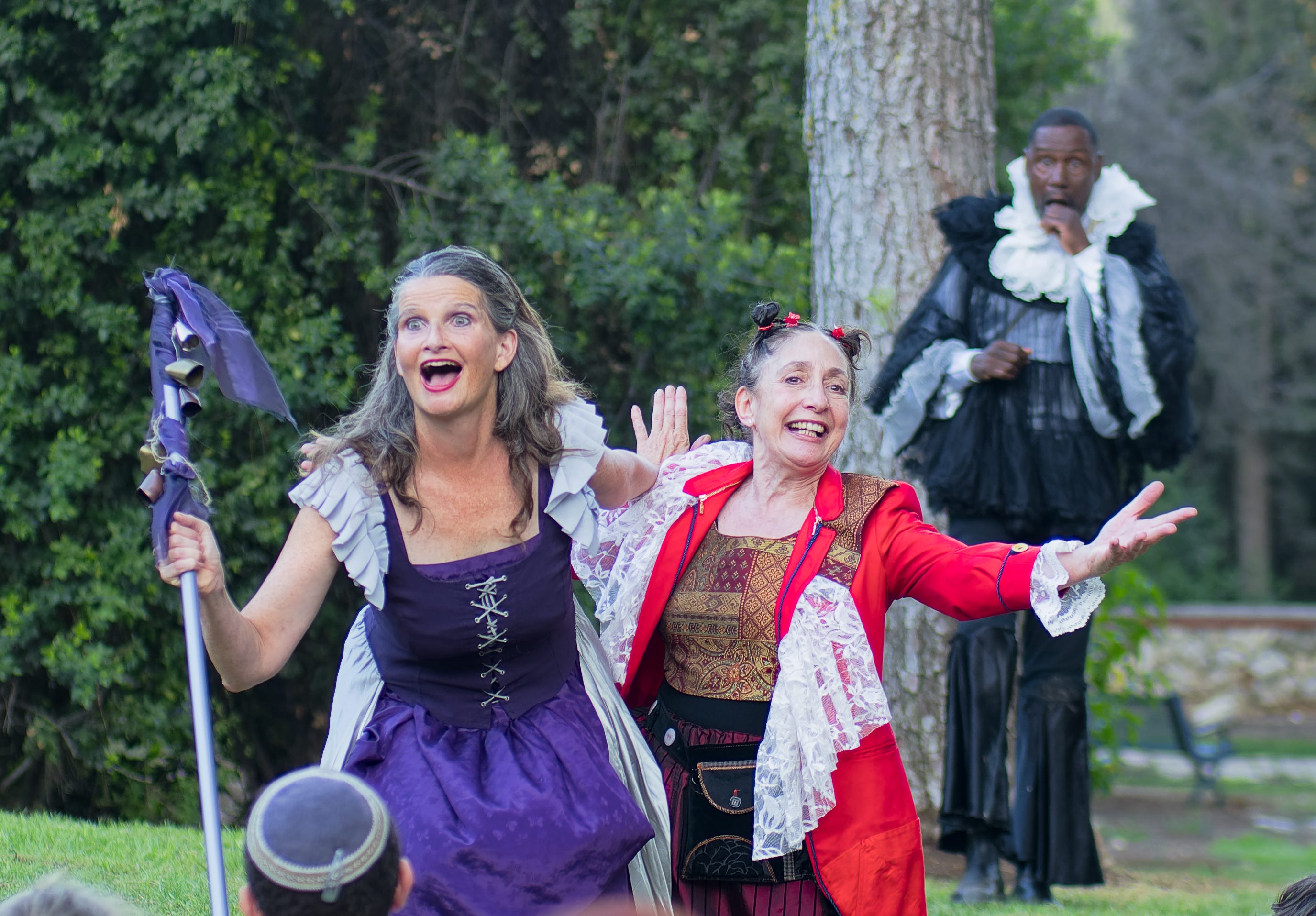
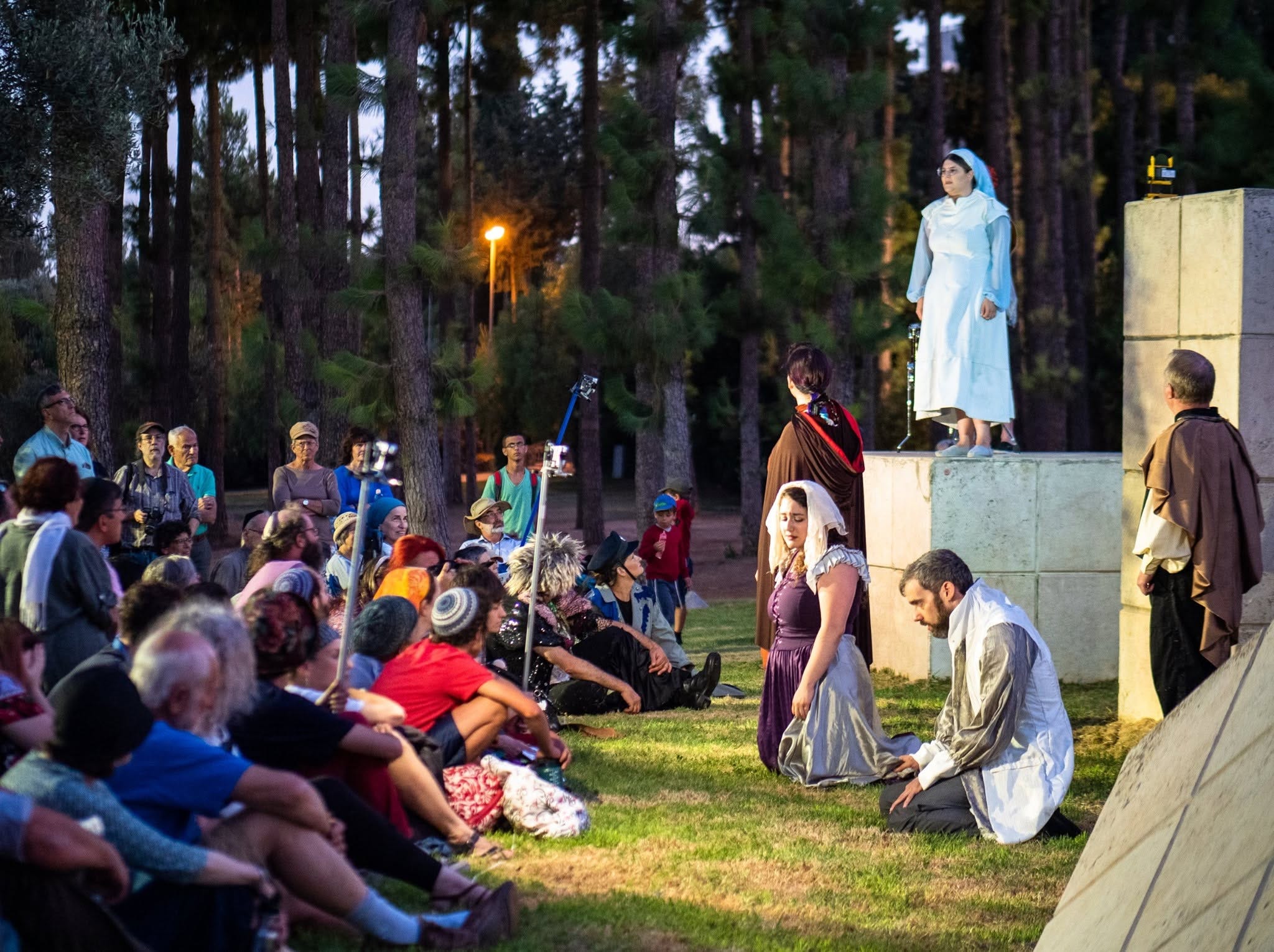
Digging in deep with The Tempest is easy now, given we’re a month before opening on August 12th. The scenes feel familiar, even as the actors continue to refine their lines and their blocking. We work outside in a public park - last week it was the Kite Festival, and each day, something new gets in our way from picnicking families to wedding photo shoots and canoodling couples - and as soon as it gets dark, whatever was remembered becomes elusive. You have to read between the lines, and let the story take you places, especially as you commit to your character.
When Theater in the Rough began its unexpected journey back in 2010, I don’t even remember how we chose Twelfth Night that year. It’s a great play, funny, troubling in some places, and full of that desire for love and affection that we all have. We cast it with a group of would-be Shakespearean actors and those whom we convinced to join the fun, rehearsed and staged it in Jerusalem’s Liberty Bell Park, and invited the locals to come and see it. Where we thought 50 people would come, but 500 came, over 2 shows. And everyone said, “what are you doing next year?”
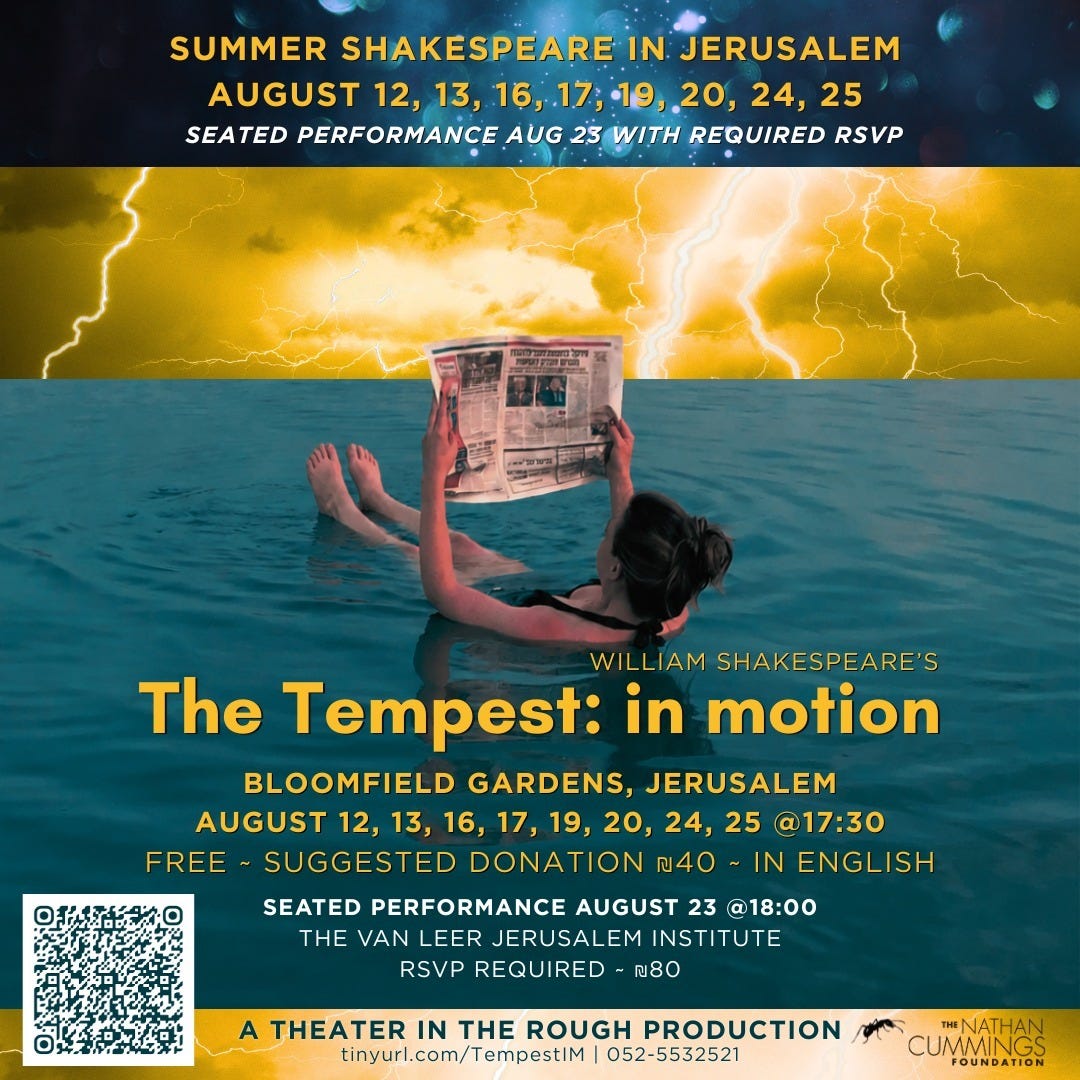
So this year? It’s The Tempest, and if you’re town, come and see it.
Share this post and tell a friend. Support community theater!